
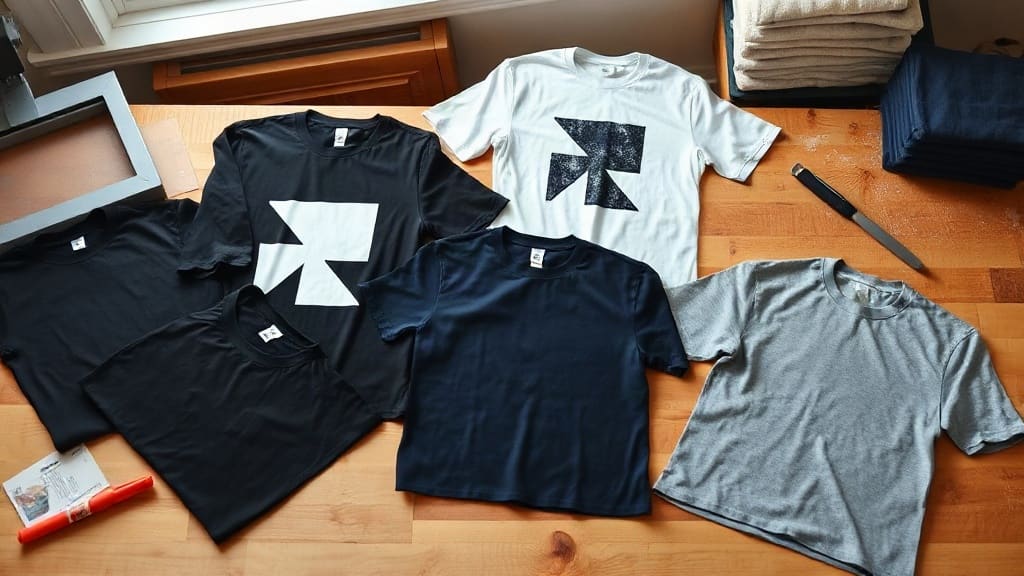
When you hold a Shaka Wear tee for the first time, the weight is unmistakable. The fabric feels dense, the stitching tight, and the shape holds its structure. For anyone who prints apparel, that heft is exactly what you want. It means the shirt won't warp after a few washes, and the print surface stays smooth. But turning these blanks into retail-ready custom shirts takes more than just running them through a press. This guide walks through everything I've learned from printing on Shaka Wear for years, from choosing the right decoration method to avoiding the mistakes that ruin heavyweight cotton.
Why Shaka Wear Blanks Are a Printer's Best Friend
Most blank tees on the market fall into one of two categories: cheap and thin, or overpriced and inconsistent. Shaka Wear sits in a sweet spot. Their core fabric is 100% cotton, typically 6.5 oz or heavier, which puts it in the heavyweight class. That weight matters because it resists the torque of a screen printing squeegee. On a 4 oz ring-spun tee, a heavy ink deposit can stretch the fabric and cause the print to crack. On a Shaka Wear blank, the fabric pushes back, keeping the ink where it belongs.
Beyond weight, the cut is another advantage. Shaka Wear tees run a bit boxy, with a relaxed shoulder and a longer body. That silhouette is popular for streetwear, skate brands, and anyone who wants a modern, oversized look. When you combine that fit with a crisp print, you get a garment that feels intentional, not like a blank that was an afterthought.
Choosing the Right Decoration Method for Custom Shirts
Not all printing techniques play nicely with heavyweight cotton. Here's how the main options stack up when you're working with Shaka Wear.
Screen Printing: The Gold Standard
If you're making custom shirts in bulk, screen printing is usually the best choice. It offers the lowest cost per unit at higher quantities, and the ink bonds beautifully with Shaka Wear's dense weave. Water-based inks soak into the fabric for a soft, vintage feel, while plastisol sits on top for bold, opaque colors. For the best results, use a 110 to 160 mesh screen for white ink on dark garments, and a 200 to 230 mesh for finer details. Always test your squeegee pressure on a scrap piece first. Too much pressure and you'll drive ink through to the back; too little and you'll get a patchy print.
DTG Printing: Great for Small Runs and Photos
Direct-to-garment printing has improved dramatically in recent years. On Shaka Wear, DTG works best when you pretreat the shirt properly. The pretreatment solution helps the ink adhere to the cotton fibers and prevents it from washing out. Because Shaka Wear is 100% cotton, it takes DTG ink well, but the heavy fabric means you may need to increase the number of passes. A good rule of thumb: run a test print on an offcut or a cheap tee of similar weight before committing to a full batch. DTG is ideal for one-off designs, full-color photographs, or gradient patterns that would be expensive to screen print.
Embroidery: Adding a Premium Touch
For a truly high-end look, embroidery on Shaka Wear is a smart move. The heavyweight fabric can support dense stitch counts without puckering, which is a common problem on thinner tees. Left-chest logos, sleeve hits, and small back-neck details all work well. Just be sure to use a cut-away stabilizer, and keep the design under 8,000 stitches for a clean finish. Embroidery gives custom shirts a tactile quality that prints can't match.
Step-by-Step: How to Print on Shaka Wear Without Ruining the Shirt
Even experienced printers make avoidable mistakes. Here's a workflow that consistently produces professional results.
- Pre-press the shirt. Shaka Wear tees often arrive with slight moisture from shipping. A quick press at 320°F for 5–10 seconds removes wrinkles and moisture, giving you a flat canvas.
- Use the right adhesive. Heavyweight cotton needs a strong platen adhesive. Water-based adhesives work, but for long runs, a spray adhesive designed for thick fabrics holds better.
- Control your off-contact. Set the screen about 1/8 inch above the shirt. Too much off-contact and you'll lose detail; too little and the screen will stick to the fabric.
- Flash and cure properly. If you're using plastisol, flash between colors at 250–300°F until the ink is dry to the touch. Final cure should reach 320°F throughout the ink film. For water-based inks, you'll need a conveyor dryer to fully cure the ink and make it wash-fast.
- Check for dye migration. Shaka Wear's darker colors, like black and navy, can sometimes bleed into white ink. Use a low-bleed white or a dye-blocking underlay if you're printing light colors on dark garments.
After curing, let the shirts cool completely before folding. Stacking them warm can cause the ink to stick to itself and create permanent marks. A little patience here saves a lot of headaches.
Design Tips for Shaka Wear Custom Shirts
Because Shaka Wear tees have a relaxed, boxy fit, your design should complement that silhouette. Oversized prints work exceptionally well: a large back graphic that spans 12 to 14 inches wide feels balanced on a heavyweight tee. For left-chest logos, keep the width between 3 and 4 inches. If you're using text, choose bold sans-serif fonts that hold up at a distance. Thin, delicate lines can disappear on textured cotton, especially after a few washes.
Color choice also matters. On a black Shaka Wear tee, a white print pops with high contrast, but a tonal print (black ink on black fabric) creates a subtle, premium look that's popular in streetwear. Just be aware that tonal prints require precise registration and a clean screen, since any imperfection shows.
Common Mistakes to Avoid
- Skipping the pre-press. Moisture and wrinkles are the enemies of a smooth print.
- Using too much ink. Heavy ink deposits feel plastic-y and crack over time. Aim for a thin, even layer.
- Ignoring cure temperatures. Under-cured ink washes out; over-cured ink scorches the fabric.
- Not testing on the actual garment. Every fabric behaves differently. Always do a test print on the exact Shaka Wear style you plan to use.
These mistakes are easy to fix once you know they exist. A little preparation goes a long way toward making your custom shirts look like they came from a professional shop.
Frequently Asked Questions
Can I use heat transfer vinyl (HTV) on Shaka Wear shirts?
Yes, HTV works well on Shaka Wear, but you need to adjust your press settings. Heavyweight cotton requires higher pressure and slightly longer dwell times than a standard tee. Set your press to 320°F for 15–20 seconds with medium-heavy pressure. Always peel the carrier sheet while it's still warm for a clean release.
What's the best way to wash custom shirts printed on Shaka Wear?
Turn the shirt inside out and machine wash cold with mild detergent. Avoid fabric softener, which can break down the ink over time. Tumble dry low or hang dry. If you hang dry, the print will last significantly longer, and the heavyweight cotton will keep its shape.
How many colors can I screen print on a dark Shaka Wear tee?
You can print as many colors as your press allows, but each color adds cost and complexity. On dark garments, you'll typically need a white underbase for bright colors. For simplicity and cost, limit yourself to three or four colors. If you need photographic detail, DTG might be a better fit.
Do Shaka Wear shirts shrink after printing?
Shaka Wear tees are pre-shrunk, but 100% cotton can still shrink slightly, usually around 3–5% in the first wash. To minimize surprises, wash and dry your blanks before printing if you're concerned about fit. However, most printers prefer to print on unwashed garments for the smoothest surface.
Where can I buy Shaka Wear blanks for my custom shirt project?
You can find Shaka Wear blanks at authorized retailers and online at shakawearusa.com. Buying directly from a reputable source ensures you're getting authentic heavyweight tees, not knockoffs. Authentic Shaka Wear blanks have consistent sizing and fabric weight, which is critical for professional printing.